Is Your Bedroom Helping You Sleep? Why Your Sleep Environment Matters More Than You Think
Is Your Bedroom Helping You Sleep?
Why your sleep environment matters more than you think
When people ask me how to improve their sleep, they usually expect me to talk about bedtime routines, caffeine, light exposure, or how many hours they should be sleeping.
Rarely does anyone ask about their bedroom itself.
And I'm not talking about whether your mattress is expensive or whether your blackout curtains are good enough.
I'm talking about something much simpler.
What does your brain see every time you walk into your bedroom?
Because believe it or not, your bedroom isn't just where you sleep. It's an environment your brain is constantly taking in—and sometimes, without realizing it, it may be asking your brain to stay awake instead of helping it wind down.
Now before you start imagining that I'm about to tell you to become a minimalist or organize your closet this weekend, let me reassure you: that's not where this is going.
Life is busy.
Homes are lived in.
Many of us have children, work from home, or simply don't have the luxury of separate rooms for every purpose.
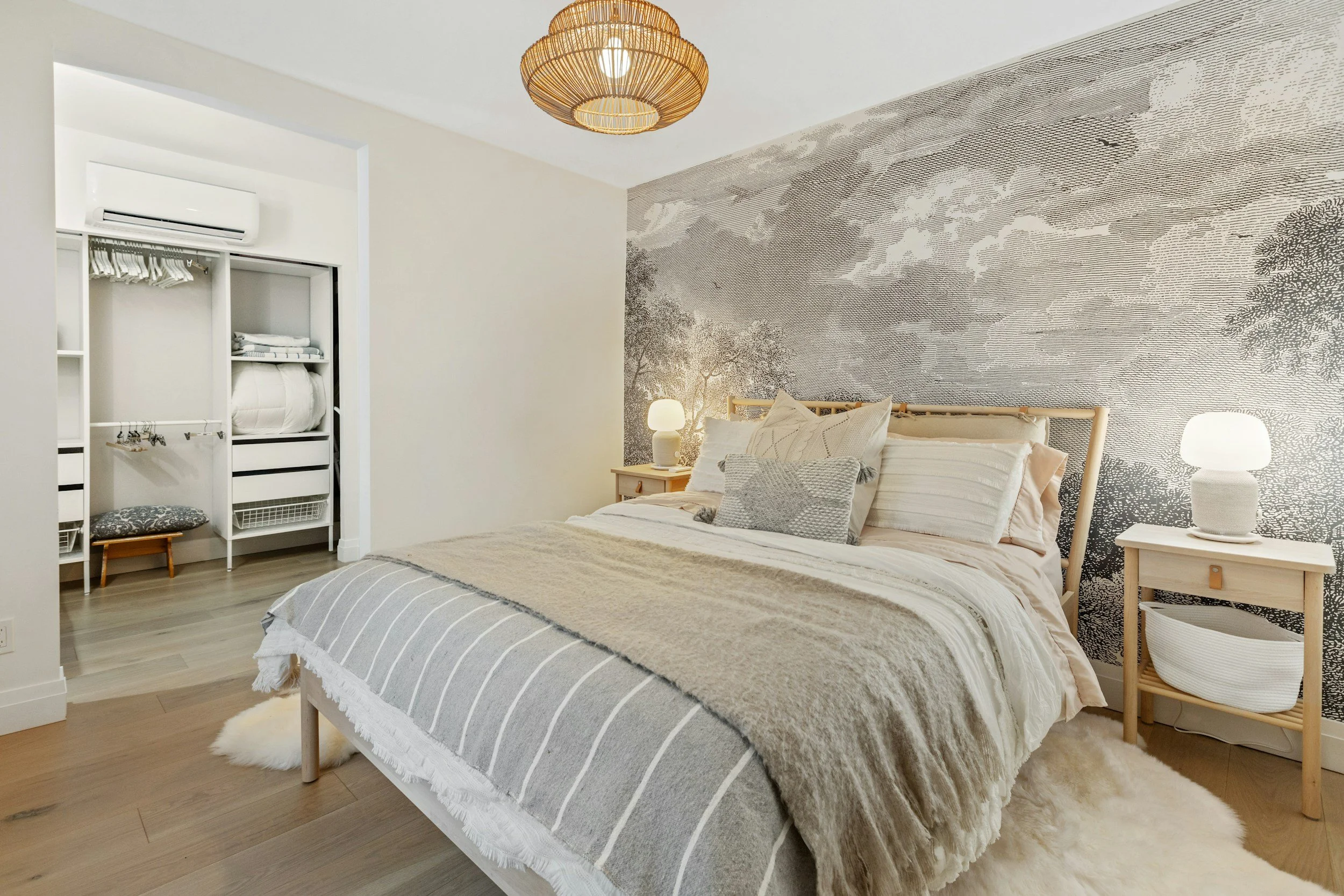
This isn't about creating a Pinterest-perfect bedroom.
It's about creating a bedroom that asks just a little less of your brain.

Your Brain Doesn't Stop Processing Just Because You're Tired
One of the things I find fascinating about the brain is that it's constantly scanning the environment around us.
Even when we're not consciously paying attention, our brain notices cues and assigns meaning to them.
That pile of laundry waiting to be folded.
The laptop sitting open on your desk.
The stack of bills you've been meaning to pay.
The Amazon box you still haven't unpacked.
The reminder to schedule that dentist appointment.
None of these things are inherently stressful.
But together, they can serve as subtle reminders of everything that's unfinished.
And for a brain that's already trying to transition from the busyness of the day into sleep, that's one more layer of information to process.
The Bedroom Should Feel Different
One of the core principles of behavioral sleep medicine is that our brains form associations remarkably quickly.
If every night your bedroom becomes the place where you answer emails, finish work, scroll social media, solve tomorrow's problems, and finally attempt to sleep, your brain starts learning something important:
This is a place where I stay mentally engaged.
Ideally, we want the opposite.
We want the bedroom to become a cue for slowing down.
Not because the room itself makes you sleepy, but because over time your brain begins to associate that environment with rest rather than activity.
This is one reason cognitive behavioral therapy for insomnia (CBT-I) places so much emphasis on strengthening the connection between your bed and sleep.
Our environment matters.
Not because it's magical—but because our brains are constantly learning from it.
It's Not About Having a Perfect Bedroom
Whenever I talk about this topic, I worry that people picture a perfectly styled bedroom with white bedding, matching nightstands, and absolutely nothing out of place.
That's not real life.
Especially if you have young children.
Or live in a small apartment.
Or your bedroom doubles as your home office.
The goal isn't perfection.
The goal is simply asking:
"What small changes would make this room feel a little calmer?"
Sometimes that's all it takes.
Start With What You See From Bed
Here's a simple exercise I'd encourage you to try tonight.
Once you're in bed, look around your room for a minute.
Ask yourself:
"What is my environment asking my brain to think about right now?"
Is it reminding you of tomorrow's meeting?
The laundry you forgot?
The work project you still need to finish?
Or does it mostly communicate that the day is winding down?
This exercise isn't about judging your room.
It's about noticing what your brain might be processing before you've even turned off the lights.

Small Changes Can Make a Big Difference
You don't need to redesign your bedroom.
In fact, I'd start much smaller than that.
Here are a few ideas:
Clear the surface of your nightstand so it only holds the things you actually use before bed.
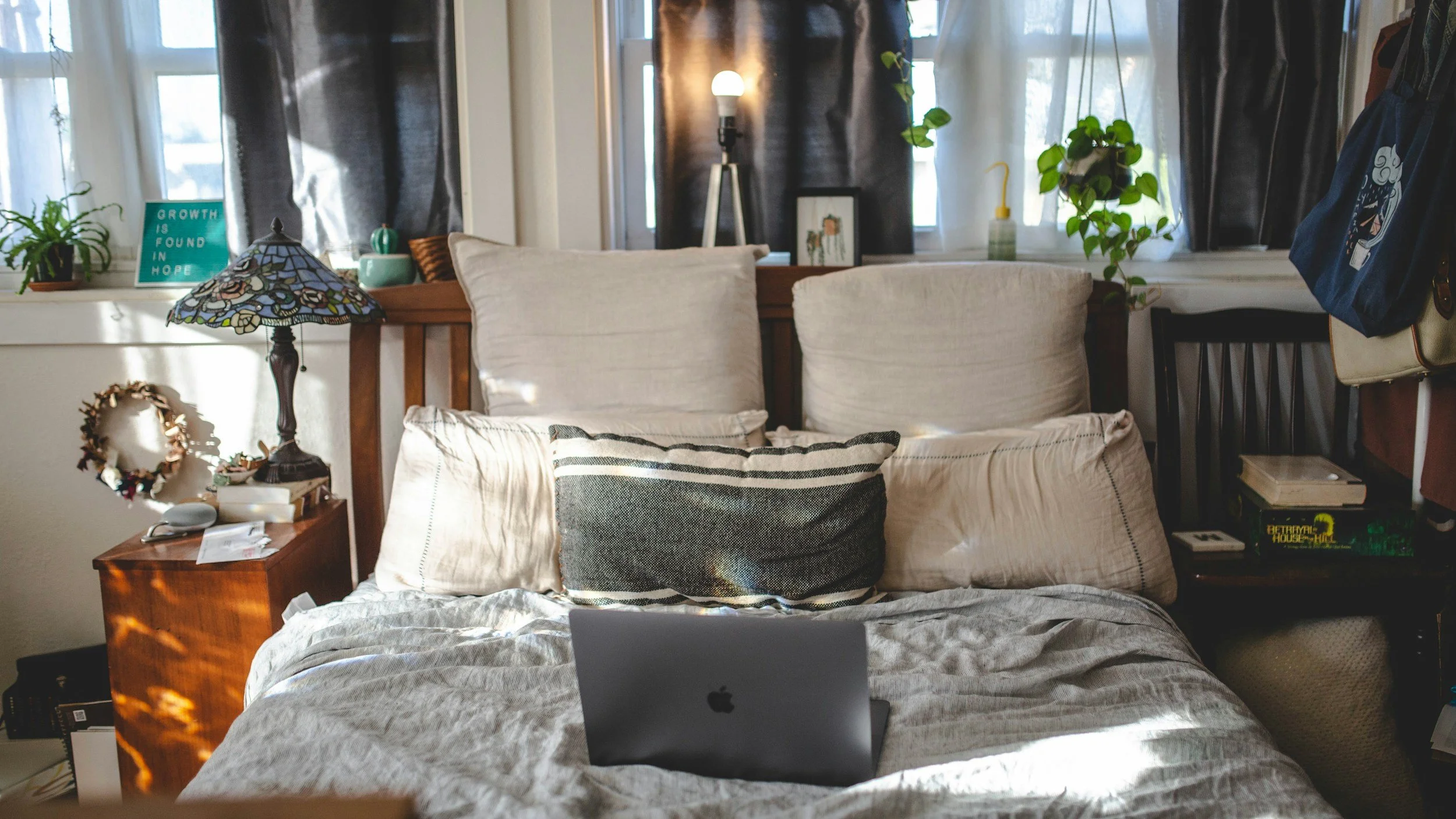
Close your laptop at the end of the workday—or even better, move it out of sight if possible.
Put paperwork, bills, or work materials into a drawer or basket overnight.
If your bedroom also serves as an office, consider covering your desk in the evening with a simple throw or fabric. It sounds surprisingly simple, but visually "closing" your workspace can help signal that the workday is over.
Keep lighting softer during the hour before bed so your environment begins to feel different from the rest of the day.
None of these changes are dramatic.
But together, they create an environment that feels less mentally demanding.
One Thing I Notice in My Patients
One thing I've noticed over the years is that people often underestimate how much mental energy they spend simply seeing reminders.
The overflowing laundry basket isn't just laundry.
It's another task.
The paperwork isn't just paperwork.
It's another responsibility.
Our brains are incredibly good at noticing unfinished business.
So while clearing a countertop won't cure insomnia, reducing those visual reminders can make it just a little easier to transition out of "doing" mode and into "resting" mode.
Healthy Sleep Is Built During the Day, Too
If you've followed my work for a while, you've probably noticed a common theme.
I'm rarely looking for one magic solution.
Healthy sleep is usually the result of many small habits working together.
Morning light.
Consistent wake times.
Regular movement.
Managing stress.
A calming bedtime routine.
And yes...
A bedroom that gently supports rest instead of constantly reminding you of everything left to do.
No single strategy changes sleep overnight.
But when enough of these pieces come together, they create an environment where sleep has a better opportunity to happen naturally.

A Final Thought
The next time you're getting ready for bed, don't worry about cleaning the entire room.
Instead, choose one thing.
Clear one surface.
Put away one visual reminder.
Close one laptop.
Move one pile of papers out of sight.
Healthy sleep doesn't require a perfect bedroom.
But sometimes giving your brain just a little less to process is one more way of telling it:
The day is over. It's okay to slow down now.
Frequently Asked Questions
-
Not directly. Insomnia is a complex sleep disorder, and a messy bedroom by itself isn't going to cause it.
What clutter can do is make it harder for your brain to fully unwind. For some people, visual reminders of work, laundry, bills, or unfinished tasks keep the brain in "thinking mode" a little longer. Creating a calmer bedroom won't cure insomnia, but it can be one small way of supporting the transition into sleep.
-
You're certainly not alone. Since working from home became more common, I see this all the time.
If you can't physically separate the two spaces, try creating some psychological separation. Close your laptop, put work materials in a drawer or basket, or even cover your desk with a throw blanket at the end of the day. The goal isn't to pretend work doesn't exist—it's to help your brain recognize that the workday is over.
-
There's no one-size-fits-all answer.
For some people, watching a familiar, relaxing show for a short time helps them unwind. For others, it becomes an hour of channel surfing, late bedtimes, or "just one more episode."
I'm usually less concerned about the TV itself and more interested in what you're watching and whether it's helping or hurting your ability to wind down.
-
Not necessarily.
You don't need a beautifully designed bedroom or expensive furniture to sleep well.
What matters more is whether your bedroom feels like a place where your brain can settle. Sometimes that means dimmer lighting, fewer visual distractions, or simply putting away the reminders of tomorrow before you climb into bed.