
Why Your Teen Isn’t Lazy: Understanding the Biology Behind Teen Sleep
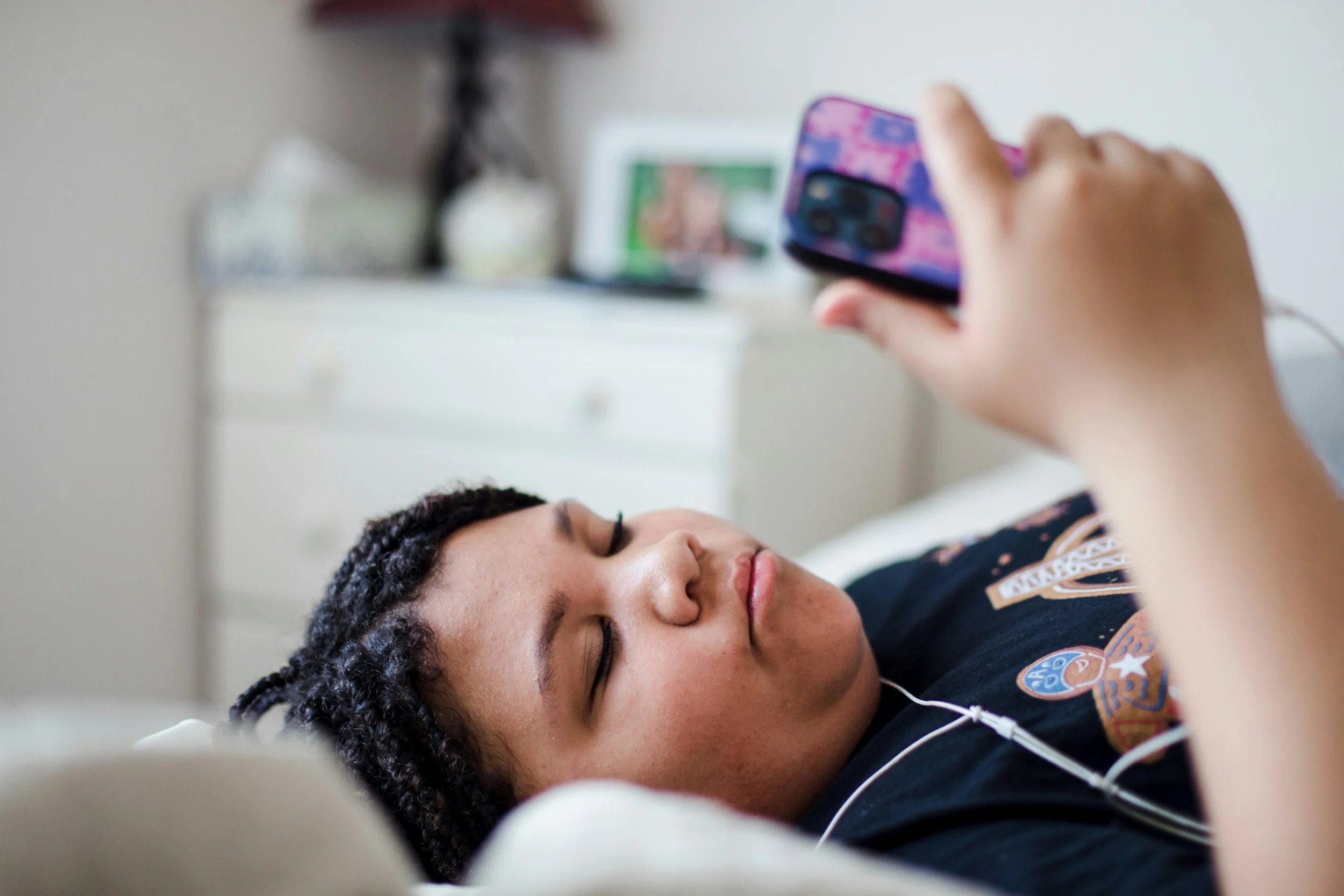
If you’re parenting a teenager, you’ve probably had some version of this thought:
“Why are they impossible to wake up in the morning…and wide awake at 10:30pm?”
Or maybe:
“They’re exhausted all week, sleep until noon on weekends, and then Sunday night becomes a disaster.”
Or:
“They say they’re tired all day, but then suddenly seem to have endless energy at night.”
Many parents understandably wonder whether motivation, discipline, screens, or poor habits are the main issue.
And to be clear—technology, schedules, and routines absolutely play a role.
But often, biology is playing a much bigger role than people realize.
As a sleep psychologist, this is one of the most common conversations I have with families. Parents often come in feeling frustrated, worried, or confused. Teens often feel frustrated too. They may genuinely feel like they're trying—and yet they're constantly tired, struggling to wake up, and feeling like they're being told to "just go to bed earlier."
The reality is that adolescence comes with a very real biological shift.
The Teenage Brain Naturally Shifts Later
During adolescence, the body's internal clock begins to change.
Many teenagers experience a natural delay in their circadian timing.
This means their brains often:
don't begin feeling sleepy until later at night
naturally want to wake later in the morning
struggle with very early wake times
This shift is a normal part of development.
Some teens experience a more significant shift called Delayed Sleep-Wake Phase Disorder, but even without meeting criteria for a sleep disorder, many teenagers experience a milder version of this biological change.
In other words:
Your teen may not simply be choosing to stay up late.
Their brain may genuinely be signaling sleep later than it did during childhood.
Think about it this way:
If someone asked you to fall asleep at 7:00 pm when you normally don't get sleepy until 10:00 pm, you might lie in bed, stare at the ceiling, feel restless, and become frustrated.
That doesn't necessarily mean you're resisting sleep.
It may simply mean your brain isn't ready yet.
Many teenagers are experiencing something similar.“save” your post for further editing.
Then Real Life Enters The Picture
Now let's layer on the reality of adolescence:
early school start times
homework
sports and extracurricular activities
jobs
social lives
group texts
evening screen exposure
growing independence
Many teens are expected to function like adults while maintaining schedules that don't always align with their biology.
A teenager might finish sports practice at 6:00 pm, eat dinner, start homework, shower, finally have time to text friends or relax, and then suddenly it's late.
Parents often see the late bedtime and think:
"See? They're choosing to stay up."
But many teens feel like they're trying to fit an entire life into the few hours they have left at the end of the day.
Teens Are one of the most sleep-deprived groups I see
Most teenagers need approximately 8–10 hours of sleep each night.
Many aren't getting close.
And sleep deprivation in teens doesn't always look like someone falling asleep at their desk.
Sometimes it looks like:
irritability
emotional intensity
anxiety
difficulty concentrating
lower motivation
increased conflict
feeling overwhelmed
struggling to get started on tasks
Sometimes what gets labeled as "attitude" or "laziness" may actually reflect chronic sleep restriction.
I think this is important because parents and teens can both begin creating stories about what's happening:
"They're lazy."
"I'm failing."
"I'm not disciplined enough."
"They're not trying."
When sometimes the issue isn't character at all.
Sometimes it's biology colliding with real life.
So What actually helps
Parents often ask:
"Should I just make them go to bed earlier?"
Unfortunately, it usually isn't that simple.
You generally can't force someone to become sleepy before their brain is ready.
Instead, think about supporting the overall system:
Keep wake times reasonably consistent
Increase morning light exposure
Encourage physical activity and daytime structure
Create boundaries around highly stimulating evening activities
Avoid dramatic weekend sleep shifts when possible
Protect enough time for sleep in an already busy schedule
And perhaps most importantly:
Lead with curiosity before assumptions.
Because understanding the biology doesn't mean removing expectations.
It doesn't mean teens should stay up indefinitely or that schedules don't matter.
It simply means we can work with the brain instead of constantly fighting against it.
Sometimes your teenager isn't lazy.
Sometimes they're navigating a very real biological shift in a world that doesn't always make room for it.

Struggling with sleep as a teenager — or parenting a teen whose sleep feels completely off?
Sleep difficulties during adolescence are common, bu the don’t always need to become the norm. Evidence-based approaches can help families understand what’s happening and create healthier sleep patterns that work in real life.