I spent years of my career convincing people to take sleep more seriously.
Now, quite frankly, I spend a surprising amount of time convincing people to take it a little less seriously.
And I never thought I'd be saying that as a sleep psychologist.
For years, getting by on four or five hours of sleep was practically a badge of honor. People boasted about pulling all-nighters, working late, and functioning on very little rest. Somehow, sleeping less became associated with working harder, achieving more, and being successful.
Back then, I spent a lot of time pushing back against that mentality, emphasizing the value of sleep and what it could do for people in nearly every talk I gave. And I'm really glad that I rarely have to have that conversation anymore.
But...
We've gone from celebrating how little sleep we can get to worrying that we can't function unless we've slept well enough.
And I'm not really sure I count this as progress.

I've spent years working with people who have insomnia, and one of the things that continues to fascinate me is how quickly people can lose confidence in their ability to function after a poor night of sleep.
I'm talking about incredibly capable people. Physicians, executives, parents, teachers, people who manage complicated responsibilities and make important decisions every day.
And yet, after a night of less-than-ideal sleep, they start questioning whether they should go to the gym, attend a meeting, or keep dinner plans with friends.
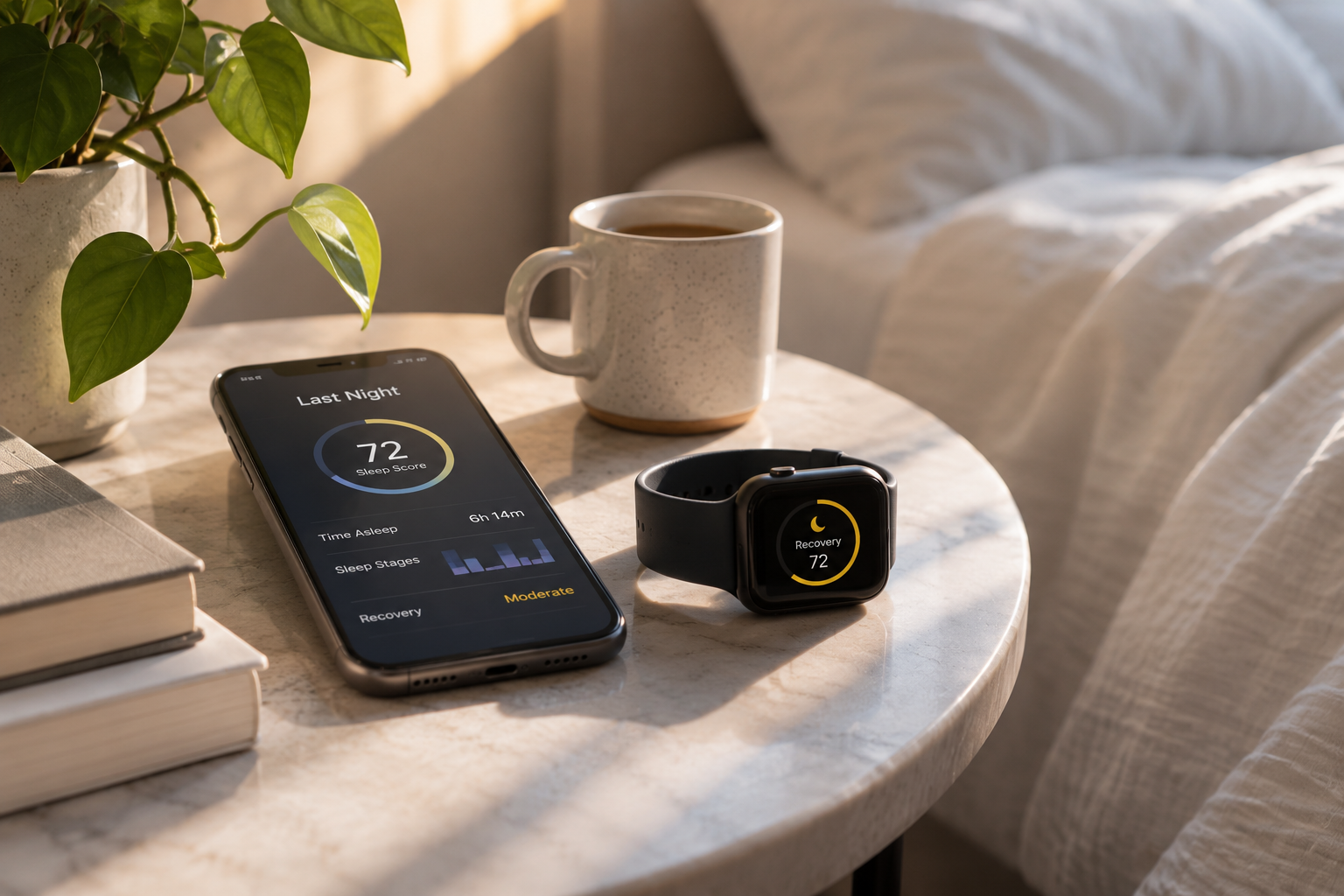
Sometimes, a poor recovery score is enough to make them reconsider their entire day.
Think about that for a moment.
If your child woke up at 2 a.m. needing their inhaler, you'd get up and help them. You wouldn't stop to wonder whether you'd gotten enough deep sleep.
If you had a 6 a.m. flight to Hawaii for a vacation you'd been looking forward to for months, you're not canceling because you slept poorly the night before.
If you had an important presentation or a day full of appointments, you might feel tired, but you'd still show up and do your best.
So why have we become so quick to assume that an imperfect night of sleep means we're not capable of having a good day?
I think we've started confusing two very different things: how we feel and what we're capable of doing.
Of course, sleep affects performance. We have decades of research showing how insufficient sleep can affect attention, memory, reaction time, mood, and physical health. There are absolutely situations where significant sleepiness means we need to rest or change our plans, especially when safety is involved.
But that's rarely what I encounter. I see people who think feeling tired automatically means they're incapable.
You can feel tired and still have a productive meeting. You can feel sluggish and still enjoy dinner with friends. You can wish you'd slept another two hours and still have a wonderful day.
And I think we've started losing sight of that.
When a Bad Night Becomes a Bad Day
What makes this even more interesting is how much our expectations can influence our experience.
When someone wakes up convinced they're going to have a terrible day because they slept poorly, they often spend the day looking for evidence that they're right.
Every yawn. Every moment of distraction. Every afternoon dip in energy.
"See? I knew I wouldn't be able to function today."
But how often do we experience those exact same things after a perfectly good night of sleep?
We all get distracted. We all have moments when our energy dips. We all occasionally forget what we walked into a room to do.
The difference is that after a poor night of sleep, we may attribute every one of those experiences to sleep.
And now we've added another layer to this: sleep trackers.
I find it fascinating that someone can wake up feeling reasonably okay, check their sleep data, and suddenly start questioning how they feel because their device tells them they didn't recover well.
Nothing about their actual sleep changed in those few seconds. Only their interpretation of it.
I'm not against sleep trackers. They can be useful tools. But I do wonder what happens when we start trusting a number on our wrist more than our own experience.
Especially when those numbers are estimates and can't tell us with certainty how well we're going to function that day.

You Don't Have to Earn Your Day
I wish I could scream this for everyone to hear:
You don't have to earn your day with a good night of sleep.
You don't need a green recovery score to enjoy time with your family. You don't need eight perfect hours to have a meaningful conversation, accomplish something at work, or go for a walk.
And you don't have to pretend you feel wonderful when you don't.
Maybe you slept poorly and feel tired. That's okay. Maybe you need to take things a little easier or make some reasonable adjustments.
But there's a difference between acknowledging that you're tired and assuming that being tired means you can't do what you had planned.
And for people struggling with insomnia, that distinction can be incredibly important.
Because the more we organize our lives around getting sleep exactly right, the more pressure we place on something that doesn't respond particularly well to pressure.
I obviously don't want us to go back to celebrating four hours of sleep. I want people to prioritize sleep, protect their sleep opportunity, and recognize how important it is for their long-term health.
But I also want people to trust themselves to handle an imperfect night.
To stop treating every bad night as a prediction of a bad day.
To recognize that sleep naturally varies, and that we don't have to rearrange our entire lives every time it doesn't go as planned.
We've made tremendous progress in helping people understand that sleep matters.
I think our next step is helping people understand that imperfect sleep is okay, too.
The goal was never to get perfect sleep.
It was to live a healthier, fuller life.
And I'd hate for our pursuit of better sleep to start getting in the way of that.